
Roofing Dumpster Rental in Owensboro, KY
Roofing Dumpster Rental in Owensboro is available for qualifying tear offs in Owensboro and Daviess County, sized by roof squares, tear off layers, and material, not home square footage or a generic chart.
Older roofing systems need a materials review before tear off begins. Share photographs and details of the proposed placement area so access can be reviewed before scheduling; the roofing contractor remains responsible for chute use, fall protection, and site safety.
100+ ReviewS
Licensed & Certified
100% Satisfied clients
Is Roofing Dumpster Rental in Owensboro Right for Your Project?
A roofing roll off fits when a complete or substantial roof removal is planned, your crew will load debris as work progresses, and the property has a suitable placement area. A different option may work better for a small repair producing a few bundles, when carry out labor is needed, or when the roofing material is suspected to contain asbestos.
Roofing Projects We Support
Residential Asphalt Shingle Tear-Offs
Three tab or laminated shingles, underlayment, fasteners, and ridge material. Any planned or discovered decking replacement should be estimated separately, since it adds real material and weight to the load.
Multi-Layer Tear-Offs and Decking Replacement
Extra layers and damaged sheathing can substantially change the load from the original estimate. Confirm the actual layer count before booking rather than guessing from the building’s age.
Commercial Flat and Low-Slope Roof Removal
Flat and low-slope systems may include membranes, built up roofing, insulation, cover boards, and ballast that require separate material review rather than a standard mixed load.
Metal, Cedar, Tile, and Slate Roof Removal
These materials differ from asphalt in weight, sharp edges, and handling. Tile and slate are weight sensitive and often need a dedicated load or a lower fill limit. Metal roofing may be separated for handling or recycling when a confirmed outlet is available.
Hail, Storm, and Multi-Building Roofing Projects
In June 2025, Daviess County reported that construction and demolition volume at its landfill had more than tripled following the March 15, 2025 hailstorm, with the Solid Waste Manager estimating an additional 15,000 tons a month for several months afterward. That experience shows why receiving locations and accepted roofing components should be reconfirmed after any major storm, not assumed from past routing.
Separate Roofing Debris Before Loading
| Material Stream | Examples | Planning Action |
|---|---|---|
| Asphalt tear off | Identified asphalt shingles and modern underlayment approved during booking | Confirm as a roofing load |
| Wood decking | Plywood, OSB, boards | Confirm whether it may be mixed |
| Metal components | Flashing, drip edge, gutters, vents | Separate when required or practical |
| Specialty roofing | Tile, slate, metal panels, membrane, ballast | Review weight and handling |
| New material packaging | Plastic wrap, straps, pallets, unused or damaged new material | Confirm separately; check whether returnable products should go back rather than in the container |
Separating debris this way improves your weight estimate, keeps the load correctly classified, and reduces the chance of a rejected or reclassified load. Daviess County facilities may assess a misidentified waste fee when a declared load contains undeclared material; your rental company’s own material change and additional charge terms should also be confirmed.
Size the Roofing Load and Service Plan Together
One roofing square equals 100 square feet of actual roof surface, not interior floor area or building footprint. Your roofer’s estimate may already state the measured square count.
Count every removed layer rather than assuming a single layer, since an older roof stripped to the deck can weigh far more than the visible roof covering suggests. Confirm whether all layers are the same roofing material, since a roof can hide an older material like wood shakes beneath the visible covering. Identify the roofing material, asphalt, metal, cedar, tile, slate, or membrane, since each behaves differently in a container.
Add decking, underlayment, flashing, gutters, and vents to your estimate, and disclose any wet or storm damaged material, since saturated sheathing and felt add real weight. Tell us how the crew plans to load the container, rear door loading, hand loading, or an approved chute, since the loading method can affect practical wall height and container placement. Compare one larger container against planned swaps based on your project pace and available footprint. Confirm actual dimensions on the dumpster sizes page and review included weight and possible charges on the pricing page rather than assuming a universal squares to size chart.

What Should a Roofing Dumpster Quote Include?
| Quote Item | What to Confirm |
|---|---|
| Container | Actual dimensions, wall height, and approved use |
| Roofing material | Asphalt, metal, cedar, tile, slate, or membrane |
| Tear off size | Roof squares and layer count |
| Added debris | Decking, underlayment, and accessories |
| Rental period | Included calendar days |
| Included weight | Allowance before overage |
| Overage | Rate and method used to calculate it |
| Fill rule | Top rail or lower roofing load limit |
| Delivery zone | Standard or extended service area |
| Final pickup | Whether one removal is included |
| Swap | Price, required notice, and availability |
| Extra days | Extension rate and approval process |
| Relocation | Whether movement is allowed and its cost |
Ask how final weight is recorded, how overage is calculated, and whether weight documentation is available on request.
Placement, Debris Path, and Housekeeping at the Roof Site
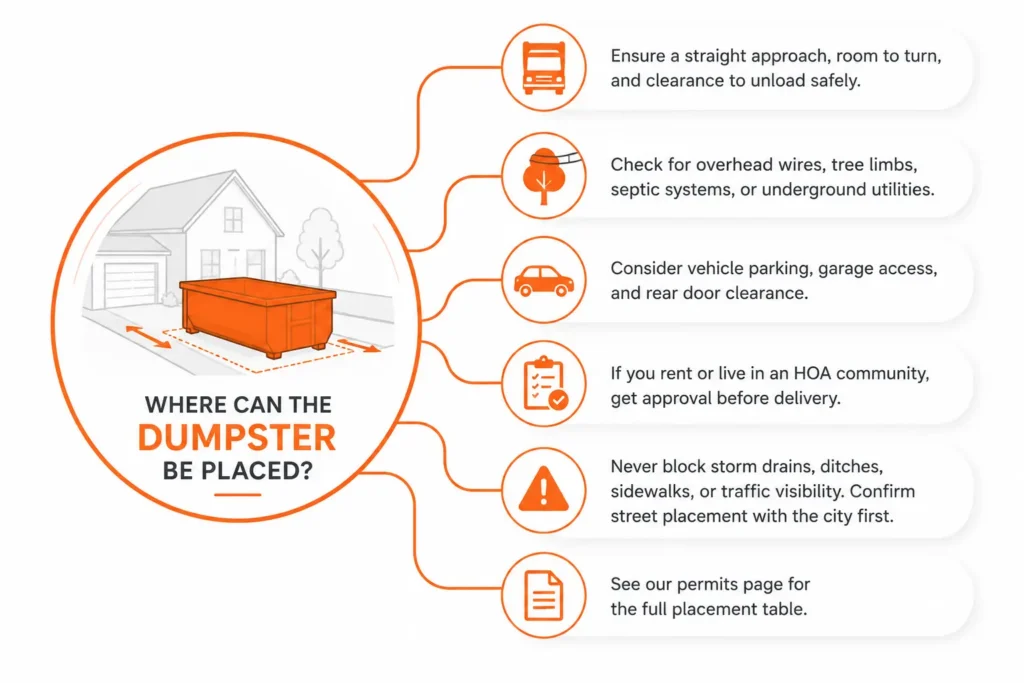
Confirm driveway width, turning space, overhead lines, gate width, and surface condition before delivery. Ask whether surface protection options are available; existing cracks, soft asphalt, pavers, and hidden ground conditions should be disclosed before delivery. Also account for septic systems, underground utilities, sloped driveways, garage door access, rear loading door clearance, air conditioning units, landscaping, irrigation, public sidewalks, and required exits.
Review how debris will actually move from the roof to the container. Ground barricades, worker and pedestrian routes, and parked vehicles all matter here. OSHA requires an enclosed chute when material is dropped more than 20 feet to a point outside the building’s exterior walls, and separately requires scrap and rubbish to be removed from the work area as the job progresses. Dumpster placement supports that cleanup, but the roofing contractor remains responsible for chute planning, fall protection, and site safety.
Managing Your Roofing Dumpster Efficiently
Assign One Authorized Contact
Choose one authorized contact to approve dumpster placement, material changes, container swaps, rental extensions, relocation, added charges, and final pickup. A single point of contact keeps communication clear and prevents conflicting instructions throughout the project.
Control Crew and Job Site Loading
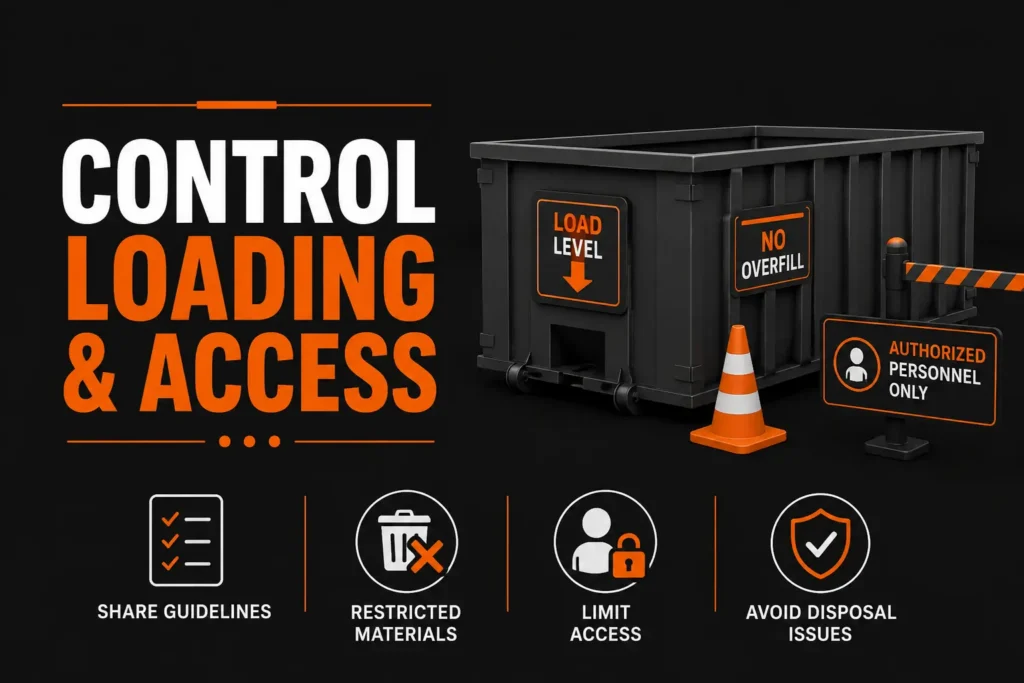
Provide your crew with the approved roofing material list before loading begins. Keep unapproved materials and debris from other projects out of the dumpster, and limit unauthorized use whenever possible.
Prevent Delays and Additional Charges
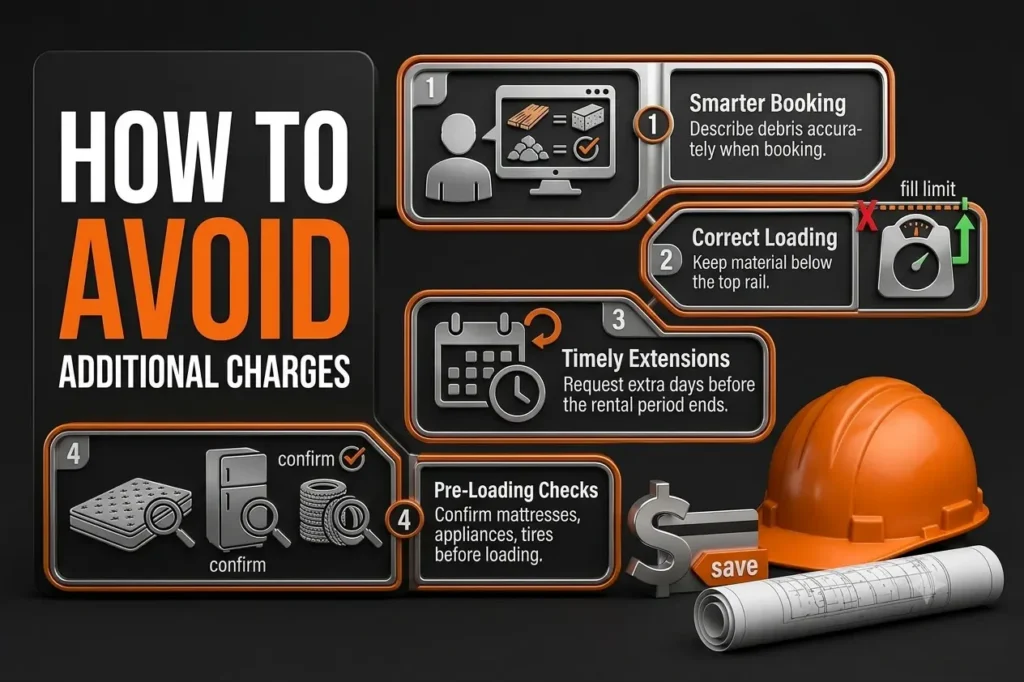
Inspect the load before requesting pickup and contact us before adding any roofing or construction material that was not included in the original order. This helps avoid load reclassification, prohibited items, project delays, and unexpected charges.
What Can Go in a Roofing Roll Off?
Commonly accepted
Confirm before loading: plywood and OSB, flashing, gutters, metal roofing, cedar shakes, tile, slate, membranes, insulation, siding, soffit and fascia, roof vents, and coated or treated wood..
Requires separate handling: tile, slate, and ballast are weight sensitive and often need a dedicated load; metal roofing may need separate handling or a confirmed recycling outlet.
Not accepted
How Roofing Booking Works?
Step 1
Describe your roof, address, squares, layers, and project dates.
Step 2
Identify the complete material stream, roof covering, decking, underlayment, and any specialty materials.
Step 3
Review placement, the roof to container debris path, and property access
Step 4
Confirm the written price, included weight, fill rule, and authorized contact.
Step 5
When the load is ready, clear the service route, close and secure the loading door

What Owensboro Roofers and Property Owners Are Saying?
Verified feedback from tear offs, storm repairs, and multi layer roof projects will be added here as it becomes available. If you book with us, we would genuinely appreciate a review of your own.
Review Older or Regulated Roofing Materials Before Loading
Kentucky identifies shingles and cement based roofing products among materials that have historically contained asbestos. Renovation or demolition involving commercial properties, schools, public or institutional buildings, and certain multifamily structures may be subject to asbestos survey and notification requirements. Single family homes and apartment buildings containing four units or fewer are treated differently under Kentucky law, but suspected asbestos shingles or roofing felt still should not go into a standard container without proper identification and disposal guidance, since crumbling material can release fibers into the air.
Dumpster service does not replace a required asbestos survey, an environmental consultant, a certified abatement contractor, or regulatory notification where those apply. The legally responsible owner, operator, or contractor must arrange any required survey, notification, and specialized removal.
Roofing Dumpster Rental in Owensboro FAQs
We’re happy to help. If you can’t find the info you’re looking for, please don’t hesitate to reach out to us!
Call us (270) 123-4567
Roofing Dumpster Rental in Owensboro and Nearby Areas
Downtown and riverfront sites may have limited staging space, alleys, pedestrian traffic, and public placement concerns; any undocumented roof assembly should be reviewed regardless of location. Retail and commercial properties along Frederica Street may need to preserve customer parking and shared entrances during a project. Projects along the KY 54 east-side corridor, where the current project segment is one of Daviess County’s busiest roadway sections, may need to account for high traffic and changing access; review the exact route by address. Rural and multi building properties in Daviess County may have longer approaches, gates, unpaved access, or multiple possible placement locations. Service eligibility should be confirmed by exact address, material, and access conditions.